New Gas Station Build Timeline: What Takes Longest (And Why)
By Sohil Maknojia, Director of Operations··10 min read
A new fuel station build in Texas — from raw land to grand opening — typically takes 6 to 9 months when everything goes right. Most projects take longer, and the delays almost always happen at the same three places: permits, tank lead time, and TCEQ registration. Here's a realistic week-by-week breakdown based on projects we've managed.
This assumes a standard 4-pump new-construction station with a single 40,000-gallon UST on a vacant lot with no environmental issues. Larger projects or sites with complications add time.
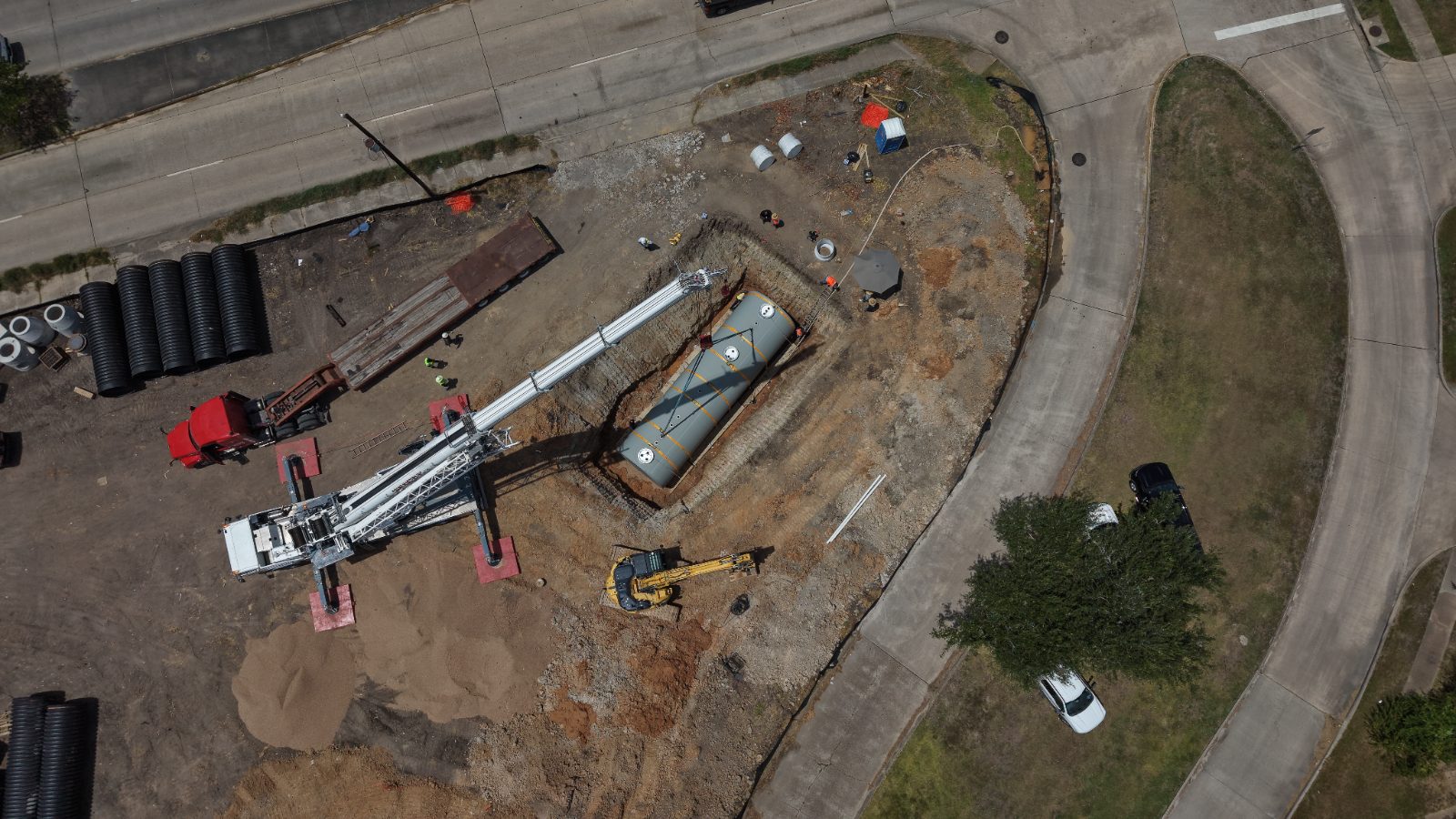
Every trade on one site at once. Getting to this day is the slow part — the day itself is fast.
Pre-Construction (Weeks 1–8)
Weeks 1–2
Site Due Diligence & Civil Engineering Engagement
Soil boring, Phase I ESA (environmental site assessment), survey. Engage civil engineer for site plan, grading plan, and drainage. Utility confirmation with city/county. This phase is often underestimated — rushing it creates expensive surprises at excavation.
Weeks 2–3
ORDER THE TANK ⚠️ Most Common Delay
This should happen before anything else. If you're using a build-to-order manufacturer, your 4–6 month clock starts here. If you're buying in-stock (like from Stealth Tanks), you can skip this waiting period — but you still need to confirm and deposit as early as possible to ensure availability.
Building permit, fire marshal review, grading permit, driveway cut permit (TxDOT if on a state highway). Some Houston jurisdictions turn around in 3 weeks; Harris County unincorporated can take 6–8 weeks. In DFW suburban jurisdictions, budget 6–10 weeks for all permits to clear. Start early.
Weeks 3–4
TCEQ Pre-Notification
File TCEQ’s construction notification with your installer’s credentials. The required notification period starts from submission, so this belongs early in the schedule rather than the week before mobilization.
Weeks 4–8
Contractor Procurement & Subcontracts
Finalize contracts for excavation, concrete, electrical, fuel system installer, ATG/leak detection vendor, canopy fabricator, pump supplier. The canopy fabricator often needs 8–10 weeks lead time — this order needs to go out as soon as site dimensions are confirmed.
Construction Phase (Weeks 8–22)
Weeks 8–10
Site Work & Utilities
Clearing, grading, rough utility trenching. Electric service application submitted to utility provider — budget 4–6 weeks for service installation by the utility, which runs in parallel with construction. Don't wait on this.
Excavation, tank placement, piping, backfill. TCEQ inspector must sign off before backfill covers the tank and again at commissioning. Schedule the inspector well in advance — in busy periods TCEQ inspectors can be 2–3 weeks out for scheduling.
Weeks 12–16
Foundations, Canopy Erection, Electrical
Fuel island concrete, canopy column foundations, canopy structure erection. Electrical rough-in for dispensers, canopy lighting, signage. This phase moves quickly if subcontractors are lined up and permitted.
Weeks 16–20
Dispenser Installation, Piping Connections, POS
Dispenser installation and hydraulic connections. ATG system startup and calibration. POS system installation and pump integration. Leak detection certification by licensed evaluator. Pressure testing final sign-off.
Weeks 18–22
Signage, Fascia, Parking Lot, Punch List
Price sign installation (permit required), brand fascia panels, parking lot striping, landscaping, final inspections. Building department final inspection typically requires all work substantially complete.
Final Steps (Weeks 22–26)
Weeks 22–24
TCEQ Final Registration ⚠️ Common Last-Mile Delay
Submit complete TCEQ registration package: inspection reports, pressure test results, leak detection certification, ATG calibration, cathodic protection test, operator training certificates. TCEQ review takes 2–4 weeks. You cannot take a fuel delivery or operate until this is in hand.
Weeks 24–26
First Fuel Delivery & Grand Opening
Once TCEQ registration is in hand, schedule your first fuel delivery. ATG alarms confirmed, dispenser calibration verified, staff training complete. Grand opening.
The Three Places Projects Actually Get Stuck
Tank lead time: Build-to-order manufacturers quoting 4–6 months push grand opening back to month 10 or 11. Order early or use in-stock inventory.
Permitting jurisdiction: Some Texas municipalities have streamlined permitting; others are unpredictable. Budget 8–10 weeks and hope for 4.
TCEQ registration backlog: At certain times of year, TCEQ review queues back up. Submit the complete package the first time — incomplete submissions restart the clock.
The single best thing you can do for your timeline: Order the tank and file the TCEQ notification on the same day. Both have lead time, and running them in parallel with permitting is the single biggest schedule lever you have.
Planning a new station build? Call 346-209-2032 — we can give you a project-specific timeline estimate and have a tank reserved before you break ground.
What runs in parallel, and what genuinely cannot
Most schedule recovery on a fuel build comes from correctly separating the two. These can run concurrently and should:
Permitting and equipment procurement
Building shell design and forecourt design
Utility applications and site civil work
TCEQ construction notification and contractor mobilization planning
These are genuinely sequential and no amount of pressure changes it:
Environmental assessment → land closing (a dirty Phase II changes the deal, not just the schedule)
TCEQ notification → the required waiting period → installation (see the registration guide for the deadlines)
Tank set → piping → backfill → paving
System commissioning → tightness testing → first fuel delivery
Where the tank sits in all this
If your tank is a four-to-six-month build-to-order item, it is your critical path and every planning decision bends around it. If the tank is already in a yard, your critical path becomes permitting — and permitting is a process you can actively work, escalate, and accelerate. That shift is the single biggest schedule lever available on a Texas fuel build. See why UST lead times hit six months.