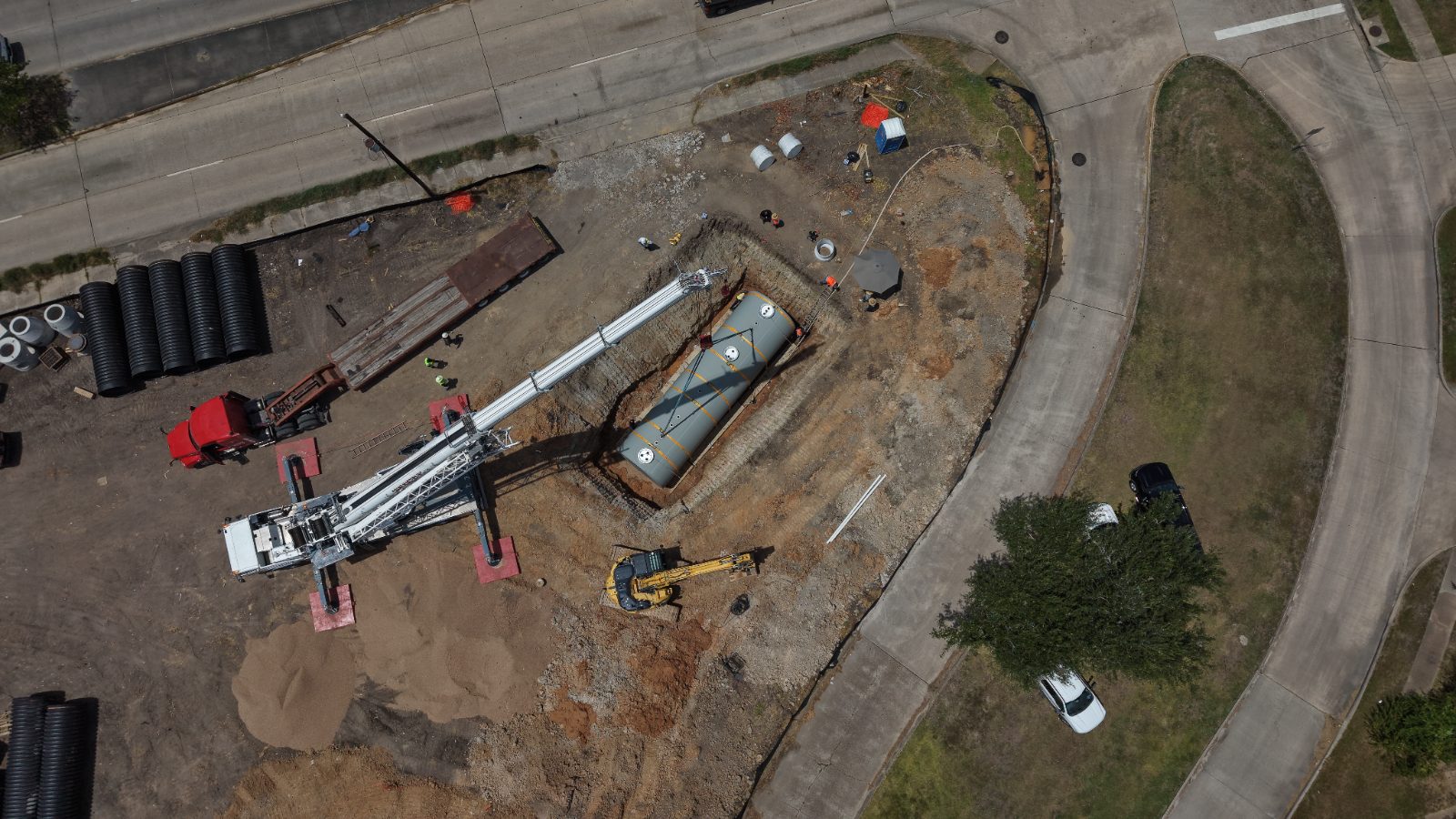
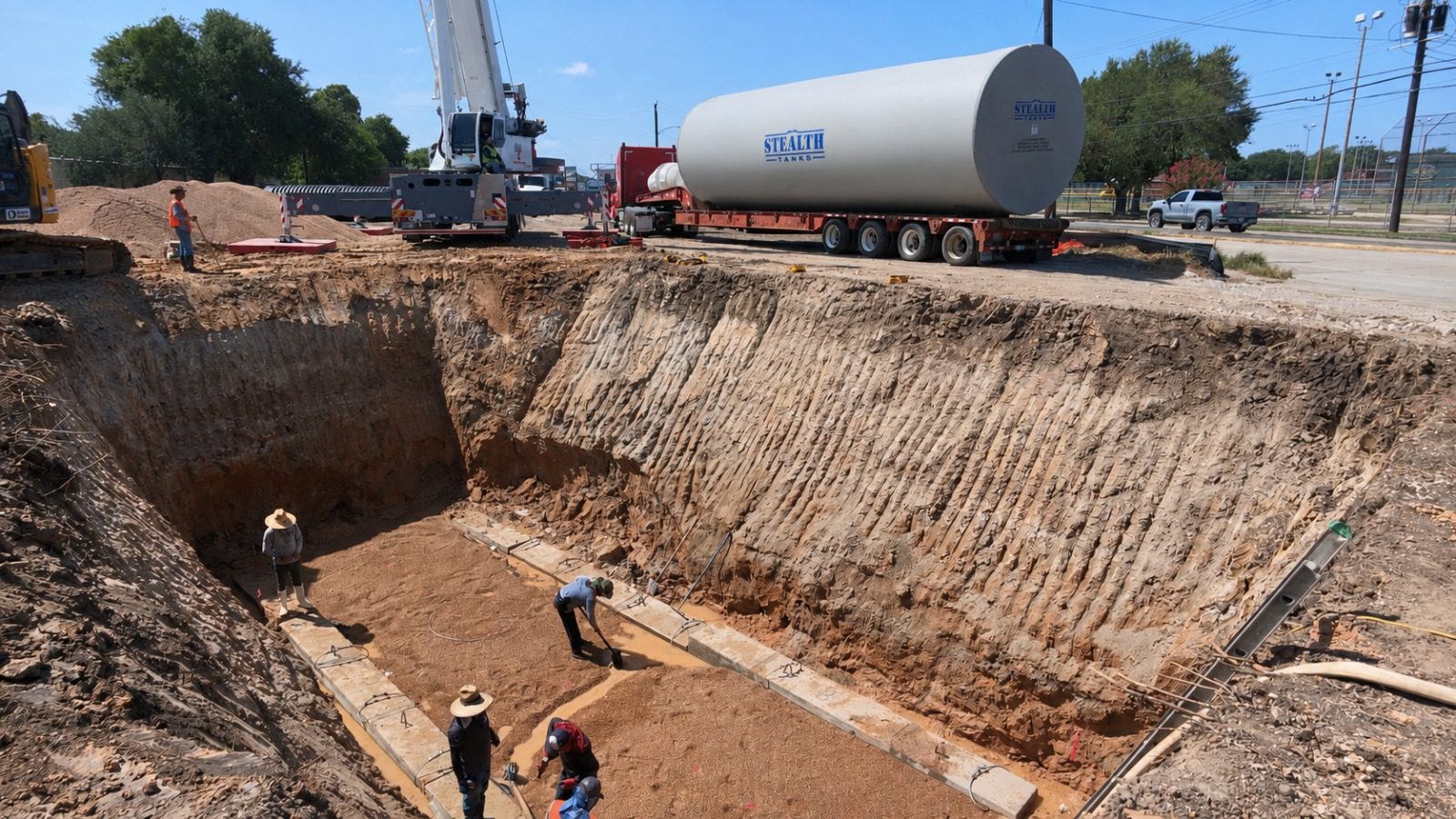
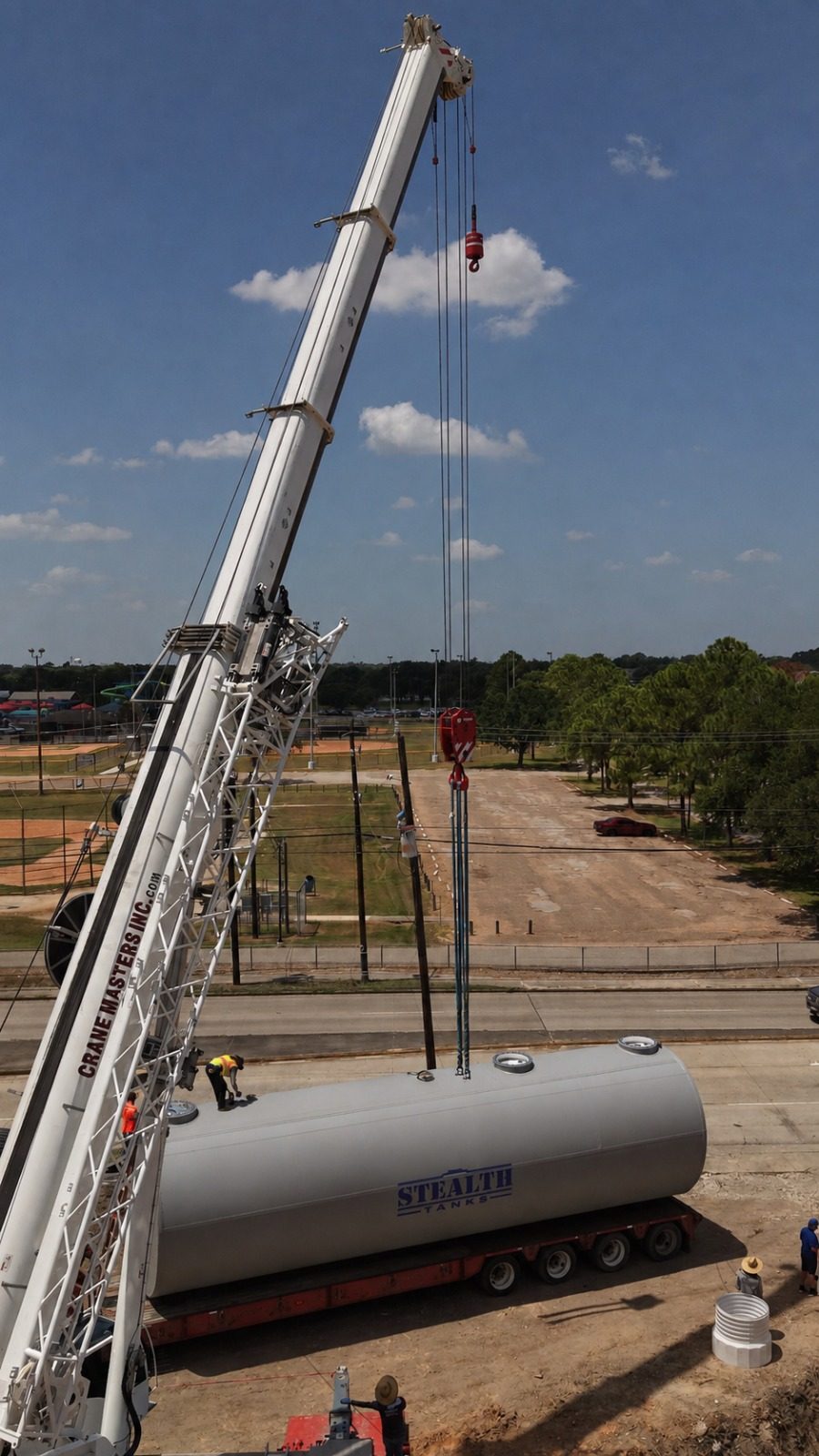
Our warehouse is at 2801 Infinite Loop in Richmond, Texas — about 30 miles southwest of downtown Houston, straight down US-59. The 32,000 and 40,000 gallon double-wall USTs are physically there right now. Most Houston-area deliveries leave within 2–5 business days of a signed order.
Harris, Fort Bend, and Montgomery counties have been among the most active retail-fuel development markets in the country for several years. The tank manufacturers have not kept up. When a developer calls a build-to-order supplier, the honest answer is usually four to six months — and that clock does not start until the order is confirmed.
That delay is expensive in a way that is easy to underestimate. A Houston fuel site carries land cost, financing, and often a signed fuel supply agreement long before it can sell a gallon. Six months of waiting on a steel tank is six months of carry with no revenue against it — and it usually pushes the canopy, dispensers, and inspection sequence back with it.
We buy tanks into inventory ahead of demand rather than against a specific order. When you call, the unit you need is either on the yard or it isn't — and we will tell you which within the hour. Check the live inventory before you call; the counts on that page are real.
Richmond to most Houston job sites is under an hour of drive time. That keeps freight cost low and, more usefully, makes the delivery date something we can actually commit to instead of estimating around a mill schedule two states away.
Texas paperwork is our home paperwork. We handle the full range of TCEQ certifications and filings on turnkey jobs, and will walk you through what applies on tank-only orders.
Everything below is inside comfortable same-day haul distance from the Richmond yard. Freight is quoted per site — on close-in work it is usually a small enough line item that it does not change the buying decision.
| Area | Cities covered | Typical delivery |
|---|---|---|
| Fort Bend County | Richmond, Rosenberg, Sugar Land, Missouri City, Katy, Fulshear, Needville | 1–3 business days |
| Harris County | Houston, Pasadena, Baytown, Humble, Spring, Cypress, Tomball, Deer Park, Channelview | 2–4 business days |
| Montgomery County | Conroe, The Woodlands, Magnolia, Willis, New Caney | 2–5 business days |
| Brazoria & Galveston | Pearland, Alvin, Angleton, Lake Jackson, League City, Texas City, Galveston | 2–5 business days |
| Southeast Texas | Beaumont, Port Arthur, Orange, Winnie | 3–5 business days |
Outside this footprint? We ship statewide — see underground storage tanks across Texas.
TCEQ is the state authority, but it is not the only body that has to be satisfied on a Houston-area fuel site. The exact mix depends on where the site sits, and this is the single most common source of schedule slip we see:
The practical point: permitting and tank lead time run in parallel, not in sequence. If the tank is a six-month item, it is your critical path and nothing else matters. If the tank is already sitting in a yard in Richmond, your critical path becomes permitting — which is a process you can actually work and accelerate.
For a fuller picture of how the phases sequence, see our week-by-week gas station build timeline and the TCEQ pre-installation checklist.
20 tanks are on the yard right now across 5 configurations. Quantities below are live.
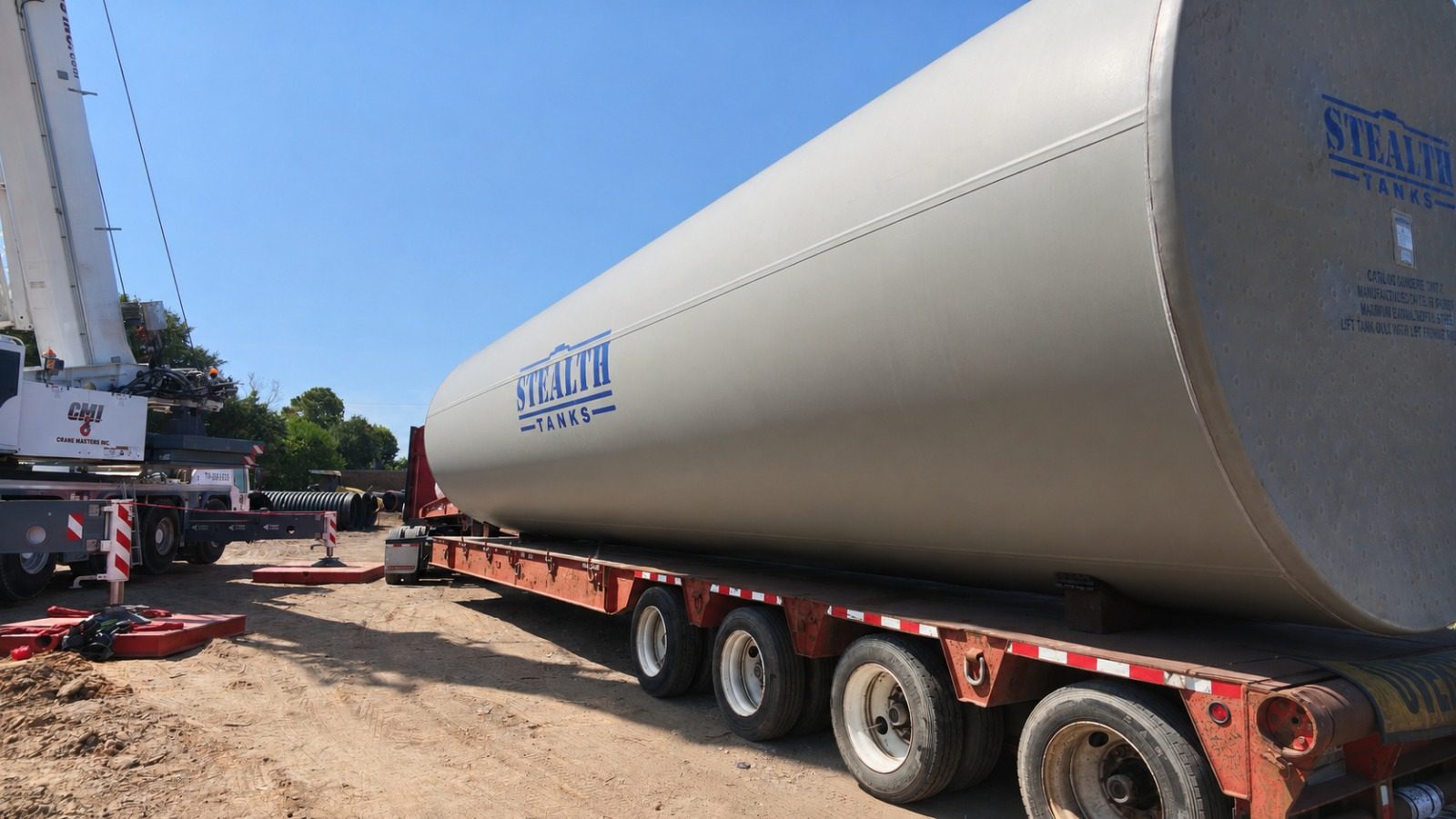
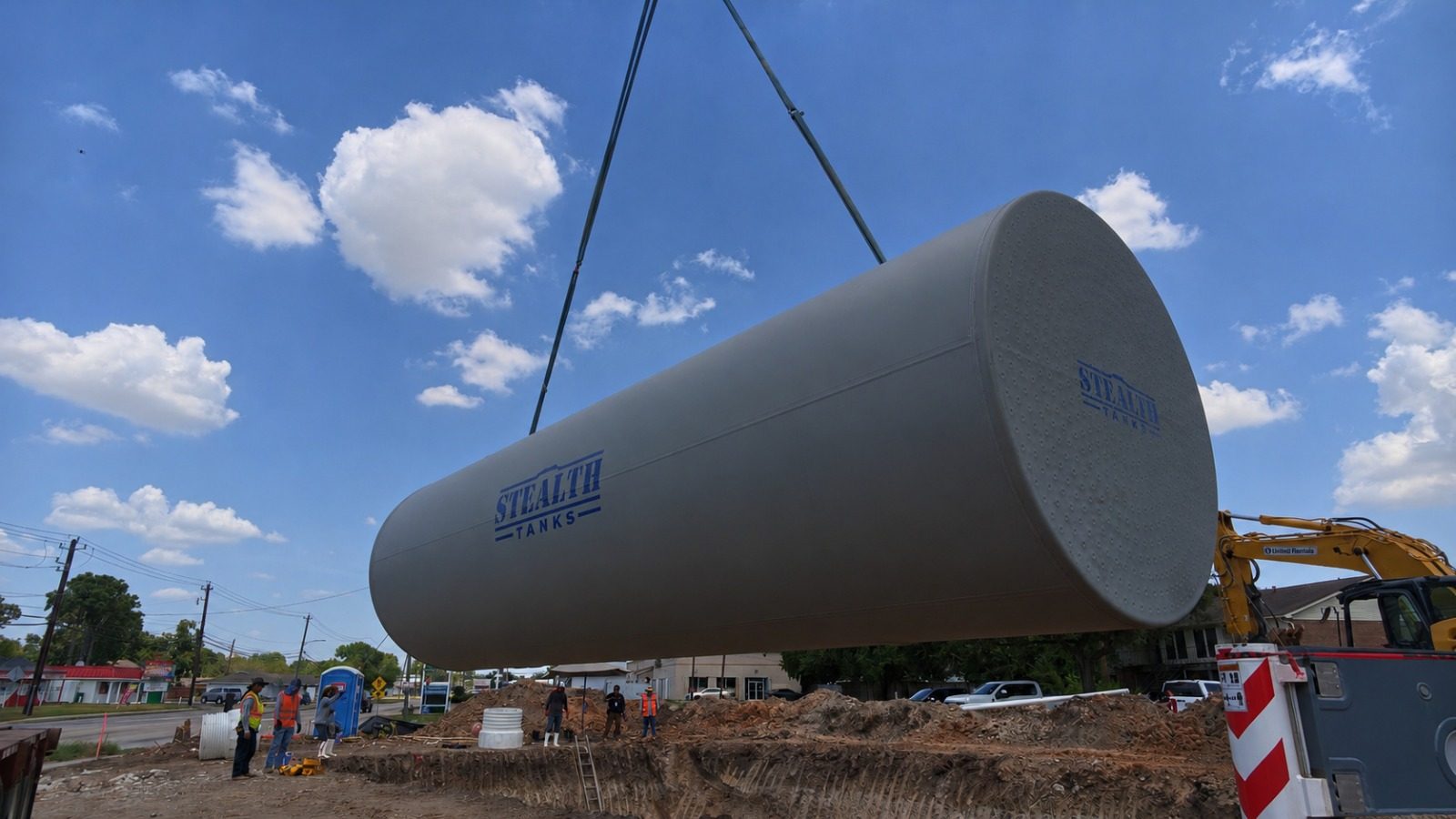
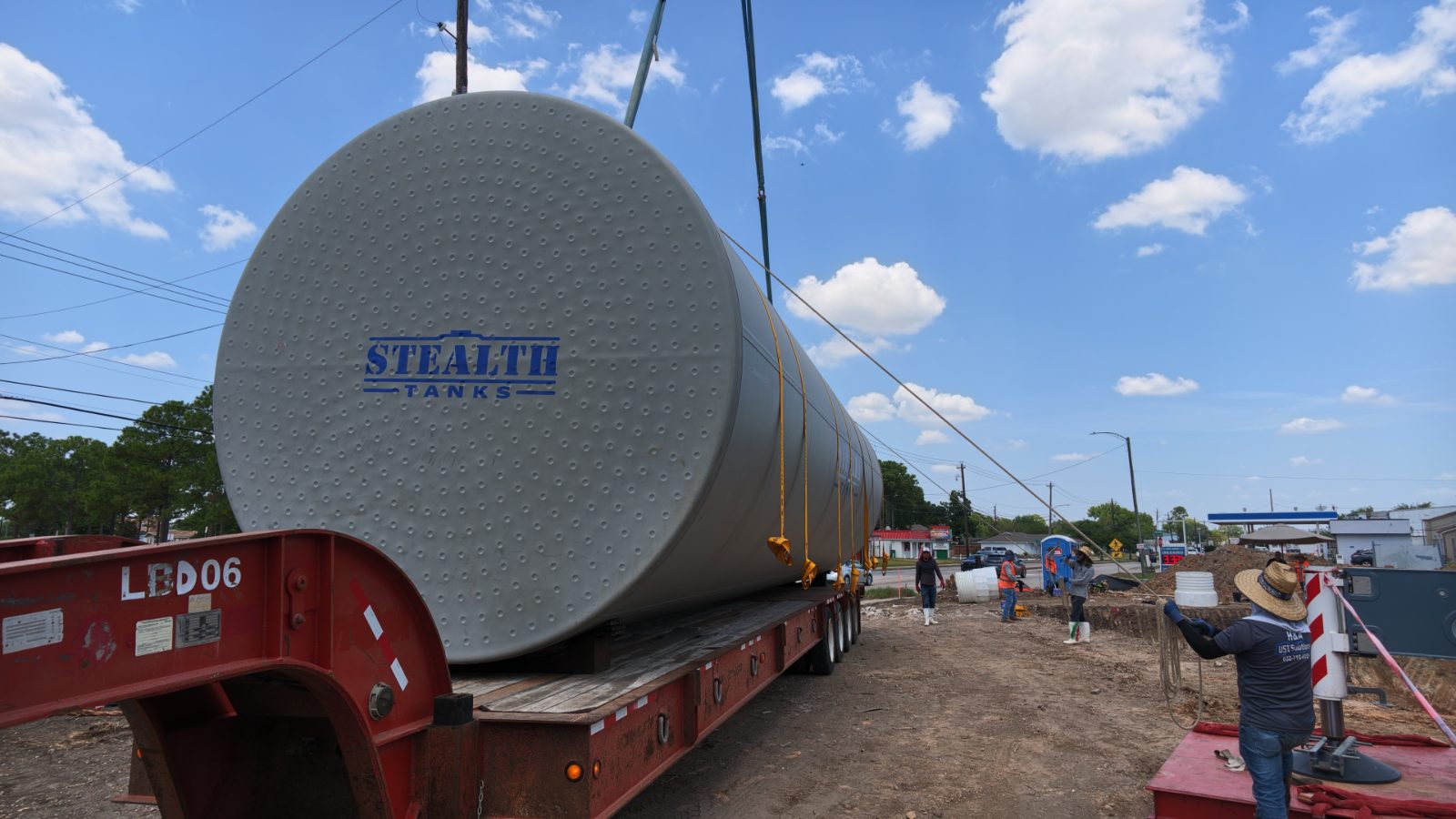
Plenty of Houston customers buy the tank and hand it to their own contractor. That is completely fine — we sell tanks, not lock-in. But if you would rather not coordinate six trades, we do the whole scope under one contract.
Dig, deadman anchors, ballast, tank set, backfill, and interstitial monitoring hookup. Gulf Coast soil and a high water table make ballast and anchoring non-optional here — a tank set light will float.
Double-wall product piping, sumps, spill buckets, and Gilbarco or Wayne dispensers set and commissioned. See our dispenser comparison if you are still deciding.
Forecourt canopy, branded fascia, lighting, and LED price signs — coordinated with your fuel supplier's image program.
Old tank still in the ground? We remove and decommission it — closure documentation, soil sampling, licensed disposal — and can do it as one mobilization with the replacement. How removal works →
We handle the full range of TCEQ certifications and filings — notification before the work, registration and certification after, and the documentation package for your site file. TCEQ compliance, explained →
Yes. Our yard is at 2801 Infinite Loop in Richmond, Texas, roughly 30 miles southwest of downtown Houston. The 32,000 and 40,000 gallon double-wall USTs listed on our inventory page are physically there, and the quantities shown are current. You are welcome to come look at a tank before you buy it.
Most Greater Houston deliveries leave within 2 to 5 business days of a signed order, depending on crane and site readiness. Fort Bend County sites are often quicker. Compare that with the four to six months the major build-to-order manufacturers are currently quoting.
The tank itself is the smaller part of the number. Current stocked pricing is published on our inventory page. Installed cost — excavation, ballast and anchoring, piping, containment, dispensers, and monitoring — typically runs several times the tank price depending on site conditions. Our UST cost guide breaks the line items down.
Yes. Installation, repair, modification and removal of regulated underground storage tanks in Texas must be performed by contractors holding current TCEQ credentials. If you buy the tank from us and install it with your own contractor, confirm their credentials are current before work begins.
Yes. UST removal and decommissioning is a service we offer, including closure documentation, soil sampling to check for contamination, and licensed disposal of the old tank. We often coordinate removal and replacement as a single mobilization, which saves you a second excavation and a second site closure.
Either. Plenty of Houston customers buy the tank and hand it to their own contractor, and that is completely fine. If you would rather not coordinate the trades, we do the full scope — excavation through commissioning and TCEQ registration — under one contract.
Usually, yes. Gulf Coast soils and a high water table mean an empty or partially filled tank can float if it is not properly ballasted and anchored. Deadman anchors and a correctly designed hold-down system are standard practice on Houston-area installations, not an optional upgrade.
Send us the city and your expected monthly throughput. That is enough for real numbers — tank, freight to your site, and installation if you want it — back within two business hours.